
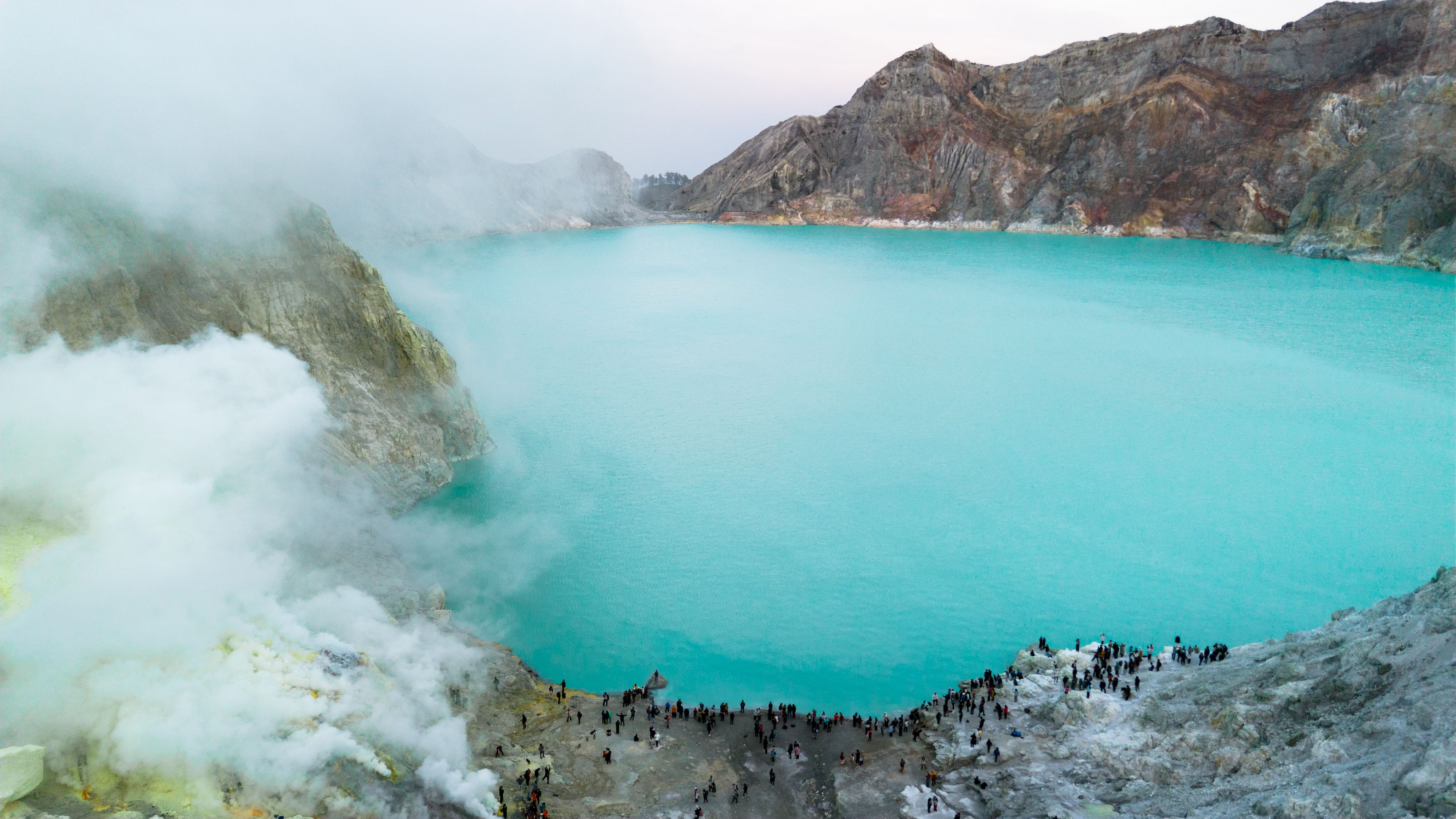
Kawah Ijen Volcano
Banyuwangi, East Java, Indonesia
Kawah Ijen is an active volcanic crater in East Java where electric-blue sulfur fires burn at night, creating one of the most visually unusual natural phenomena…
What it's like here
Kawah Ijen is an active volcanic crater in East Java where electric-blue sulfur fires burn at night, creating one of the most visually unusual natural phenomena on Earth. The trek to see them begins in darkness around 2:00 AM, climbing through dense jungle before the sulfur fumes thicken and the otherworldly blue flames come into view. As you descend into the crater itself, the scene becomes almost alien: rivers of liquid blue fire flow down the rock face, illuminated by high-temperature sulfuric gases igniting in the open air, contrasting sharply against the turquoise crater lake—the largest highly acidic body of water in the world, with a pH around 0.5.
This is a serious undertaking, not a casual walk. The trek is strenuous with steep elevation gain, and the sulfur fumes are intense; anyone with respiratory conditions should reconsider. A gas mask is mandatory, as is a health screening overseen by local authorities before you start. Local guides are required, and the hike demands reasonable fitness and comfort with darkness and steep terrain.
The experience suits solo travellers, couples, and groups of friends willing to endure a half-day to full-day excursion for something genuinely rare. The best time to visit is during the dry season from May to October. Photography is permitted, and many visitors come specifically for the surreal light show and the landscape's otherworldly quality. Parking and basic toilet facilities are available at the trailhead.
What sets Kawah Ijen apart is that the blue fire is only visible in darkness—the hike must happen at night to see it. During daylight, you would see only the crater lake and the volcanic landscape. This one-off natural phenomenon draws scientists, photographers, and adventure travellers from around the world, not because it is convenient or comfortable, but because it genuinely exists nowhere else.
Highlights
- Electric-blue sulfur fires ignited by high-temperature volcanic gases—visible only at night
- The world's largest highly acidic lake (pH ~0.5) sitting in the crater
- A strenuous night hike beginning around 2:00 AM through jungle and steep terrain
- Mandatory gas mask use and health screening before the trek
- One of the planet's most visually surreal natural phenomena
Good to know
The trailhead opens around 2:00 AM daily. A doctor health screening is mandatory per local regulations, and gas mask rental is required; local guides are also compulsory. The trek is strenuous with steep elevation gain, and fitness is essential. The sulfur fumes can be overwhelming—those with respiratory conditions should avoid the hike. The dry season (May to October) is best for visiting. Park fees run approximately IDR 100,000–150,000; combined with other costs, budget accordingly.
You might also like


Questions people ask
Why are the flames blue at Kawah Ijen?
The blue flames are caused by high-temperature sulfuric gases emerging from the volcano. When these gases meet oxygen in the air, they ignite and burn with an electric-blue colour.
Can I see the blue fire during the day?
No. The blue flames are only visible in darkness, so the hike departs around 2:00 AM. During daylight, you would see the crater lake and volcanic landscape, but not the blue fire.
Is it safe to visit Kawah Ijen?
The volcano is active and emits toxic sulfur gases. Visitors must wear a gas mask and undergo a mandatory health check. The trek involves steep and potentially slippery terrain. Those with respiratory conditions should not attempt it.
Attributes & facilities
Last verified: August 22, 2026