
Paisu Pok Lake
Luk Panenteng, Banggai Islands Regency, Central Sulawesi, Indonesia
Paisu Pok Lake is a crater lake on Peleng Island in Central Sulawesi with water so clear you can see the lake floor 10 to 15…
What it's like here
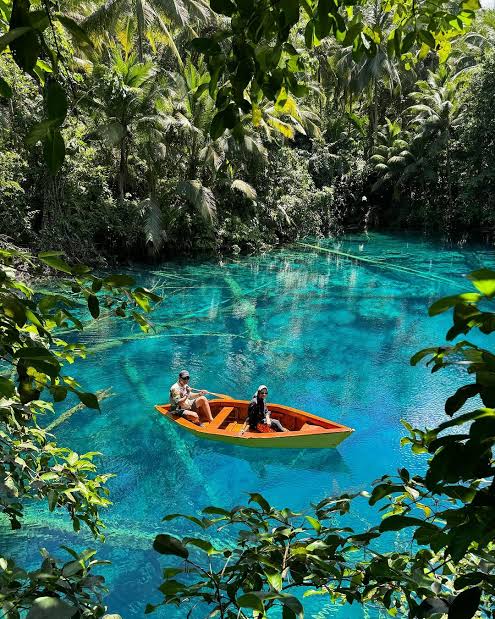
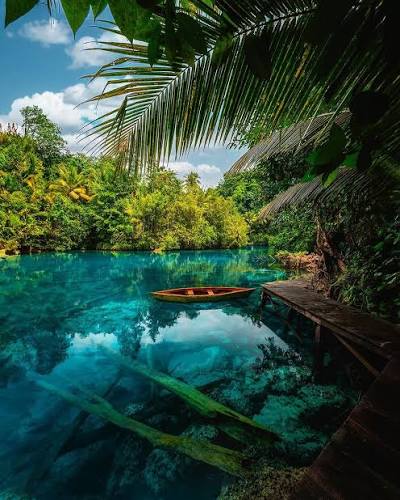
Paisu Pok Lake is a crater lake on Peleng Island in Central Sulawesi with water so clear you can see the lake floor 10 to 15 metres down. The exceptional clarity comes from the fact that it's a closed freshwater system with no ocean connection, meaning no saltwater sediment or disturbance. The local name means "black water" in Banggai—a reference to the dark-coloured lake bed visible through the glass-like surface, not the water itself. Despite gaining some social media attention, it remains rarely visited by foreign tourists due to its remote location on an island that requires multiple transport connections to reach.
The setting is striking: dense tropical jungle surrounds the crater, and the water shifts colour with the time of day and sun angle, which is why afternoons are prized for photography. You can swim, snorkel, canoe, or paddleboard here. The area has minimal commercialisation—no large resorts or developed tourist infrastructure. There's a basic entrance fee (5,000 IDR), parking and toilet facilities on-site, and you can rent canoes, paddleboards, snorkeling gear, gazebos, or stay overnight camping or in homestay accommodation. Most of the journey is getting there: you'll fly into Luwuk airport, take a ferry or speedboat to Peleng Island, then drive roughly 23 kilometres to the lake.
Visits typically take 1–2 hours to half a day, though you could easily spend longer. The lake works for solo travellers, couples, families and groups. The dry season (April to November) offers the best conditions, and weekdays are quieter than weekends. One practical note: there are no ATMs nearby, so bring sufficient cash in small bills. English is not widely spoken, so a local guide is worth arranging.
Highlights
- Water clarity of 10–15 metres, letting you see the lake floor and submerged trees as if through glass
- Surrounded by dense tropical jungle in a volcanic crater setting
- Crystal-clear water that shifts colour throughout the day, making it highly photogenic
- Swimming, snorkeling, canoeing, paddleboarding and basic overnight camping available
- Remote location on Peleng Island with minimal tourist infrastructure and few foreign visitors
Good to know
The lake is open year-round. Entrance costs 5,000 IDR. Bring cash (no ATMs nearby) and consider hiring a local guide, as English is limited. The dry season (April–November) and afternoons are best for visiting and photography. Weekdays are quieter than weekends and Indonesian holidays. Equipment rental (canoes, paddleboards, snorkeling gear) and accommodation (gazebos, camping, homestays) are available at modest cost. Allow roughly 7 hours total travel time from Luwuk airport: fly in, take the daily 2 PM ferry or a speedboat to Peleng Island, then hire transport for the 23 km drive to the lake.
You might also like



Questions people ask
Why is Paisu Pok Lake so clear?
It is a closed freshwater lake with no connection to the ocean, so there is no saltwater sediment disturbance or ocean predators affecting the water clarity. This isolated system allows visibility to reach 10–15 metres.
What activities are available at the lake?
You can swim, snorkel, canoe, paddleboard, and camp overnight. Equipment rental is available for canoes, paddleboards, and snorkeling gear. Gazebo rental and homestay accommodation are also offered.
How do I get to Paisu Pok Lake?
Fly to Luwuk airport, take the daily 2 PM public ferry (2 hours, 54,000 IDR) or a speedboat (1 hour, 150,000–400,000 IDR) to Leme Leme on Peleng Island, then hire a scooter or driver for the 23 km journey to the lake. Total travel time from Luwuk is approximately 7 hours.
When is the best time to visit?
The dry season (April–November) offers the best conditions. Afternoons are ideal for photography due to sun angle and water colour. Weekdays are quieter than weekends and Indonesian holidays.
Attributes & facilities
Last verified: August 23, 2026