
Pilak
Jolaibari, South Tripura, Tripura, India
Pilak is a thousand-year-old archaeological site spread across roughly 10 square kilometres in South Tripura, where Buddhist and Hindu remains sit side by side from the…
What it's like here
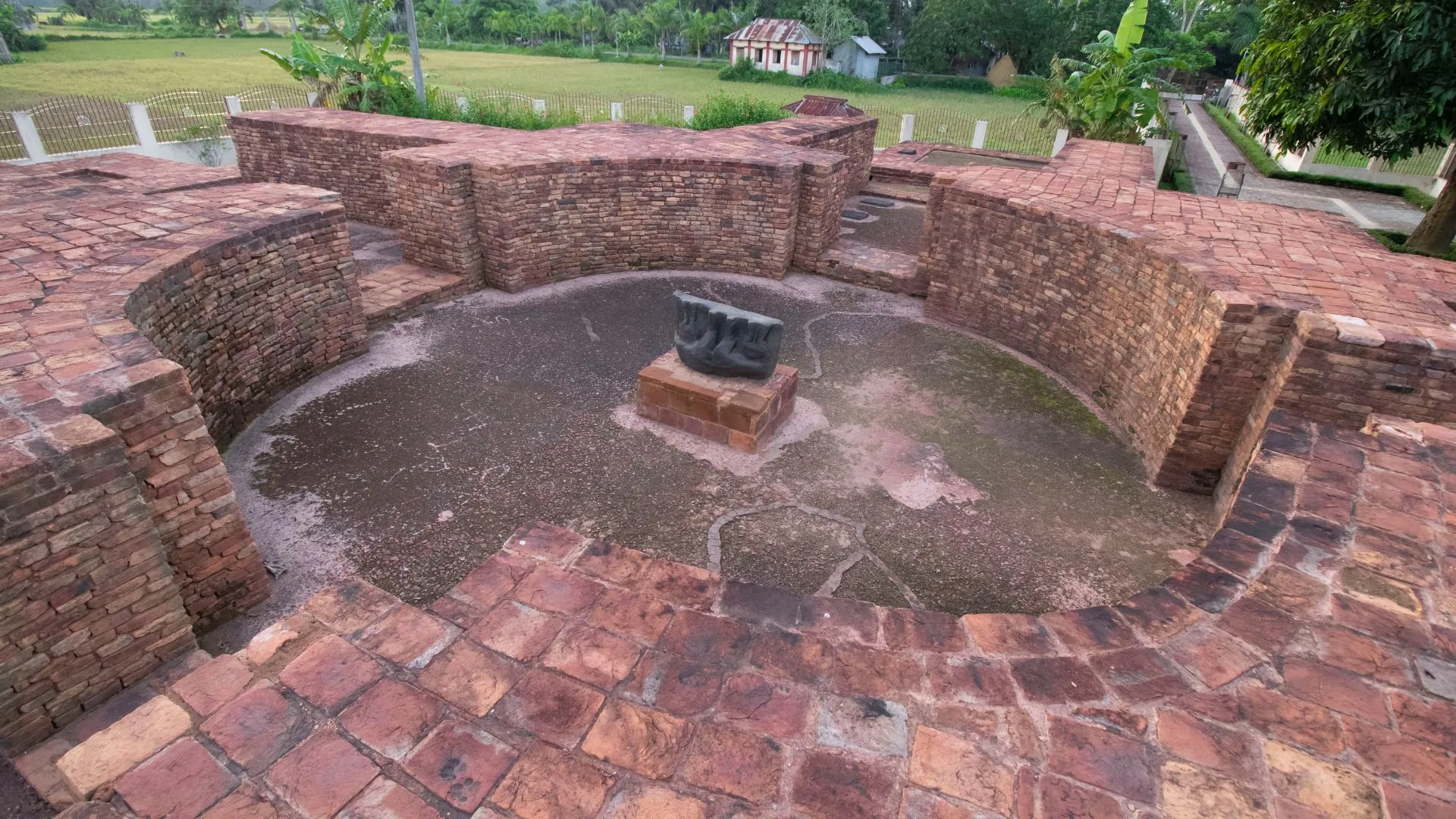
Pilak is a thousand-year-old archaeological site spread across roughly 10 square kilometres in South Tripura, where Buddhist and Hindu remains sit side by side from the 8th to 12th centuries. Under the care of the Archaeological Survey of India since 1999, it represents a rare meeting point of two religious traditions in a region where either is typically studied alone. The site is not monumental in the usual sense. What survives is mostly brickwork — stupa bases, monastic foundations, structural outlines nestled in green, humid countryside. There are no soaring temples or grand carved facades. Instead, what makes Pilak distinctive is the layering of two faiths in terracotta plaques, seals, and sculpture: Buddhist and Hindu forms, including Avalokiteshvara and Narasimha images, exist together on the same ground. Traces of Chola architectural influence appear in the structural detailing, hinting at wider trade and cultural networks across medieval South Asia.
Excavations have been running in some form since 1927–28, with major work by the ASI in the early 1960s uncovering the brick stupas that anchor the site today. The finest sculptures — notably ninth-century Avalokiteshvara images and a twelfth-century Narasimha — have been moved to the Tripura Government Museum in Agartala, so a full understanding of the site benefits from visiting both. What remains at Pilak itself are the monastic remains, inscriptions, and smaller finds scattered across the archaeological zone, readable mainly to those with genuine interest in early Buddhist history or Indian archaeology.
Visitors typically spend between 20 and 45 minutes on-site; it is not a half-day destination. The experience suits solo travellers, couples, and friends with an eye for history and archaeology, rather than those seeking spectacular ruins. Photography is permitted. The site lies in open countryside, and best visited between October and March, when the climate is cooler and drier; the summer monsoon months are hot and wet. Pilak sits 3 km from Jolaibari village, 18 km from Santirbazar, 51 km from Udaipur, and 100 km from Agartala.
The site forms part of a state archaeological tourism circuit with Chhabimura — a cliff-face rock-cut carving site above the Gomati river — and Udaipur, both in Gomati district. A visitor buffer zone of 150 metres surrounds the excavation area, so modern facilities sit outside that boundary. For those serious about understanding the syncretism and artistic exchange of medieval South Asia, and willing to read a modest landscape, Pilak rewards attention. For others, it may feel sparse.
Highlights
- Brick stupas and monastic foundations uncovered by ASI excavations in the early 1960s
- Terracotta plaques, seals, and inscriptions blending Buddhist and Hindu iconography from the 8th–12th centuries
- Sculpture including Avalokiteshvara and Narasimha forms reflecting religious syncretism
- Traces of Chola architectural influence in structural details
- Part of a wider archaeological circuit with Chhabimura and Udaipur in Gomati district
Good to know
Reported visiting hours are 9:00 to 18:00. Best visited October to March; summer monsoon months are hot and wet. Located 3 km from Jolaibari, 18 km from Santirbazar, 51 km from Udaipur, and 100 km from Agartala. The finest sculptures — ninth-century Avalokiteshvara images and a twelfth-century Narasimha — are displayed at the Tripura Government Museum in Agartala. Visitors commonly spend 20 to 45 minutes on-site. Photography is allowed.
You might also like


Questions people ask
Is it worth the trip?
It depends on your interests. Pilak is a small, low-lying brick site recommended mainly to those with an interest in archaeology or early Buddhist history. Visitors expecting a major monument tend to be disappointed.
Where are the famous sculptures from Pilak?
The major sculptures — ninth-century Avalokiteshvara images and the twelfth-century Narasimha — are displayed at the Tripura Government Museum in Agartala. Pairing the two visits makes for a much fuller understanding.
How old is the site?
The antiquities date from roughly the 8th to the 12th centuries. Excavation first began around 1927–28 and has continued in some form since.
Attributes & facilities
Experience
Features
Time
Other
Last verified: August 31, 2026